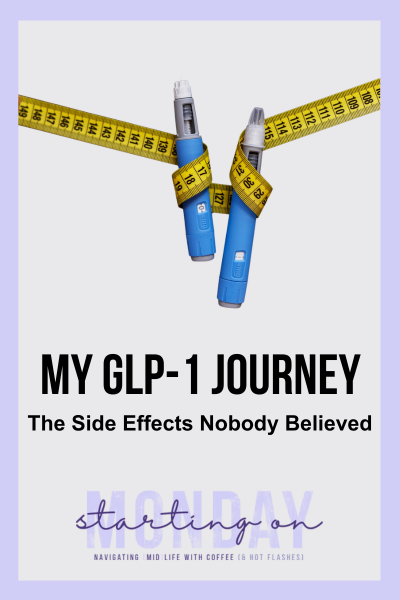
I’ve spent most of my adult life battling my weight—those times when I dropped a ton on some crazy diet, only to gain it all back, plus a few more pounds for good measure. About five years ago, I shed 25 pounds with WW and another 20 on Keto. But then, after my blood sugar levels spiked, my endocrinologist put me on Ozempic—right before it became the buzzword of the weight-loss world.
At first, I was constantly nauseous, and eating felt like a chore, but even though I was losing very slowly, people started noticing. I wasn’t aiming for skinny, just comfortable in my own skin—a size 12-14 felt perfect. But as I upped the dosage, something strange happened. I developed mysterious “hot spots” on my skin that felt like burns but left no mark. It hurt when even my clothes touched these spots. All of my connective tissue pain–my ribs, feet, & wrists got worse. My body was sending distress signals, and I tried to ignore them.
I’ve been through the wringer with autoimmune diagnoses—Lupus, Lyme, Psoriatic Arthritis, you name it. I thought losing 60 pounds would help ease my symptoms, but instead, my pain seemed to intensify. Every week, my skin flared up, my joints screamed louder, and my doctors assured me it was menopause or just a coincidence because, “There are NO reports of joint pain with Ozempic.”
Then came the day my pelvic pain roared back with a vengeance. This wasn’t the usual dull ache—it was a white-hot, tearing sensation that made me think my C-section scar was being ripped open from the inside. I went to not one but two urogynecologists, desperate for answers. I endured shots to block the inguinal nerve—painful injections that only made me feel worse. Then there were weeks of pelvic floor therapy, which did nothing but make me feel like I was wasting precious time.
Finally, one of the specialists spotted something on a sonogram—a painful revelation: scar tissue tethered my uterus to the C-section scar. The decision was made: I needed a hysterectomy, and it couldn’t come soon enough. I went off Ozempic three weeks before the surgery, partly to prepare my body and partly out of a desperate hope that maybe, just maybe, it would help ease my pain.
And wouldn’t you know it? As if on cue, the pain began to ease—like when your car magically stops making that noise the moment you get to the mechanic. But I wasn’t going to be fooled. I’d lived with this pain on and off for 18 years; I knew how it played tricks. I went through with the robotic hysterectomy, hopeful but cautious.
For two glorious weeks after the surgery, I felt like a new person. The pelvic pain was gone. Completely gone. I almost couldn’t believe it. But with that relief came an unwelcome surprise: I gained 10 pounds. And in a moment of frustration—or maybe fear of backsliding into old habits—I went back on Ozempic.
And that’s when the pain came roaring back, the very next day.
My doctor shrugged it off, said the nerve block from surgery must have worn off. “It can’t be Ozempic,” they insisted, “there’s no record of that side effect.” But I knew better. My body was screaming, and I wasn’t going to ignore it. I scoured the internet, joined every Ozempic group I could find on Facebook and Reddit, and there it was—hundreds of people just like me, experiencing these so-called “nonexistent” side effects of skin hotspots and joint/hip pain.
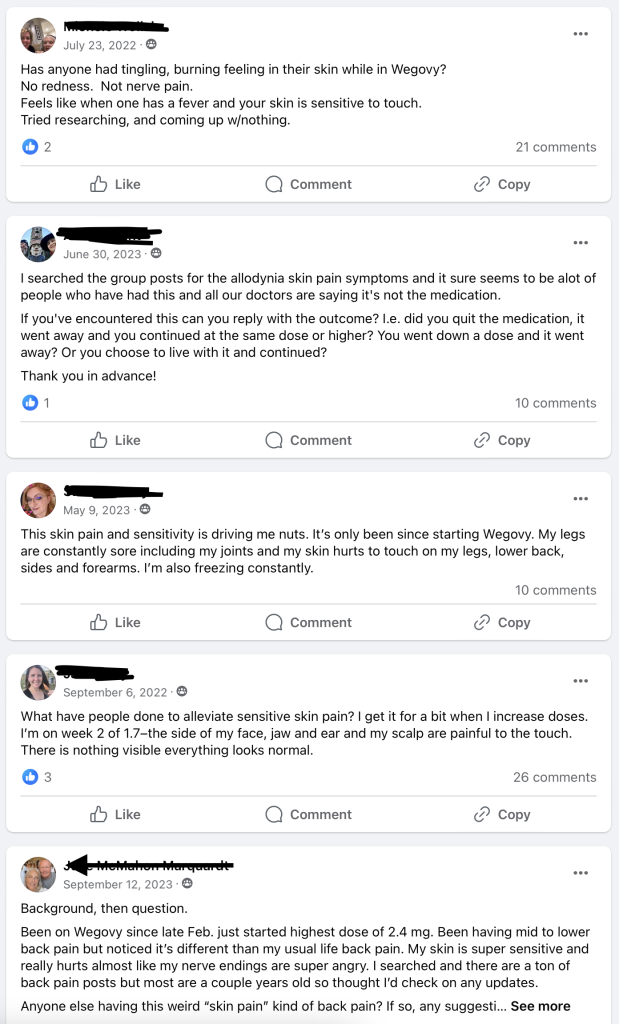
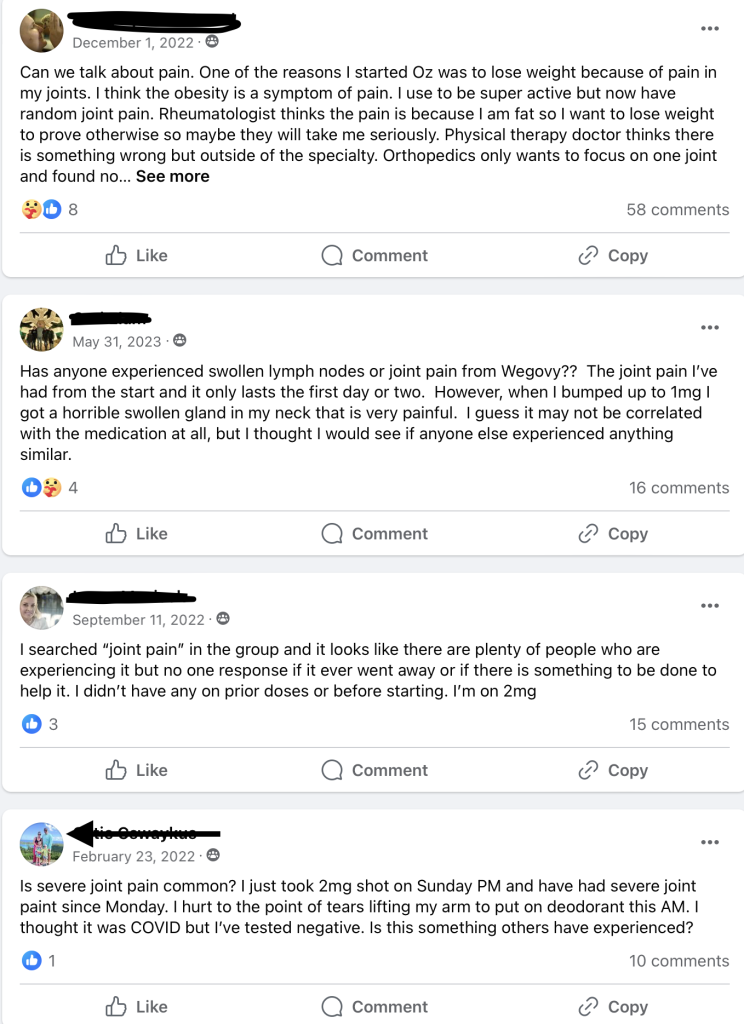
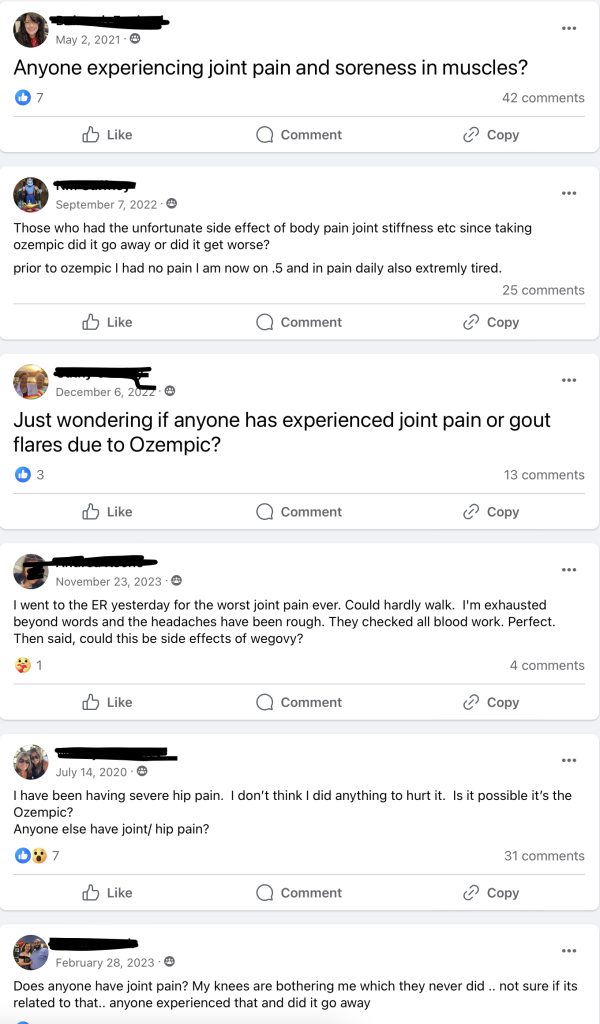
I went off Ozempic again, but the pain didn’t vanish overnight, though it did lessen. Weeks later, I tried switching to Zepbound, thinking a different GLP-1 might be better, but the day after my first shot, I could barely stand. My pain was the worst it had ever been. My hip pain, a new addition to my list of ailments, became unbearable. I was only 56, but I felt decades older. That’s when I knew—these medications weren’t my miracle; they were my misery.
Now, seven months off the medication, I’m left grappling with a body that feels more broken than before and the reality of gaining back 25 pounds. Some days, I stare at the remaining Ozempic in my fridge, tempted to give it one more try, but then I remember the pain—the kind that rips through your body and makes you question if you’ll ever feel normal again. My pain level is still WAY higher than when I started this GLP-1 journey, but it has definitely lessened from its peak. I still wonder if these drugs caused lasting damage to my connective tissue; it’s a question I can’t shake, especially when there’s no warning out there.
The saddest part of all of this is that I still think about going on it again every single day. I wonder if maybe the pain is worth it. I wonder if maybe I did a half dose every two weeks it would stop me from gaining back more of the weight. However, I saw warnings in some of these groups that it can cause permanent connective tissue damage. Of course, it’s only anecdotal because no official study says this can happen. But I struggle to get out of my chair from hip pain that I never had before beginning Ozempic.
I still find it very strange that if you google joint pain, or hip pain, or connective tissue pain from Ozempic, you won’t find a thing. If you Google skin hotspots from GLP-1 you won’t find a thing. Yet there are hundreds of people in private groups having these same symptoms. If you’re on this journey too and feeling things that “aren’t supposed to happen,” trust yourself. Sometimes, it’s not worth the risk.

Leave a Reply